MLS Laser Therapy for Hip Pain
Hip pain limits everything from how you sleep to how far you can walk. MLS Laser Therapy at Laser Spine and Pain Center in Fairfax reduces inflammation and restores movement.
Why hip pain creeps up on you
Hip pain rarely arrives suddenly. It builds. You start avoiding crossing your legs in that one direction. You notice you can't sleep on that side anymore. You find yourself bracing on the counter to get out of a chair.
The most common causes we treat are bursitis (inflammation of the cushion outside the joint), arthritis (worn cartilage inside the joint), tendonitis around the joint, and labrum irritation. They all involve inflammation. They all respond to laser therapy.
Signs your hip pain is worth treating
Hip problems show up in everyday movement before they show up on an X-ray. Common signs include:
- Stiffness in the hip or groin, especially after sitting
- Pain when walking, pivoting, or climbing stairs
- Trouble sleeping on one side
- Swelling around the joint or into the upper thigh
- A clicking or popping feeling when you move
When the hip hurts, you start moving differently without noticing. That small limp or shift in how you sit puts extra load on your lower back and knees, which is why we look at the whole chain, not just the hip.
How MLS Laser reaches your hip
The hip is buried under muscle, which is one of the reasons hip pain is hard to treat with surface-level approaches. MLS Laser uses two synchronized wavelengths that go deep enough to reach the joint capsule, bursa, and surrounding soft tissue.
The laser energy reduces the inflammatory chemicals that keep your hip swollen and stiff. It increases circulation to help damaged tissue rebuild. And it stimulates the cells around the joint to do their repair work.
What treatment looks like for your hip
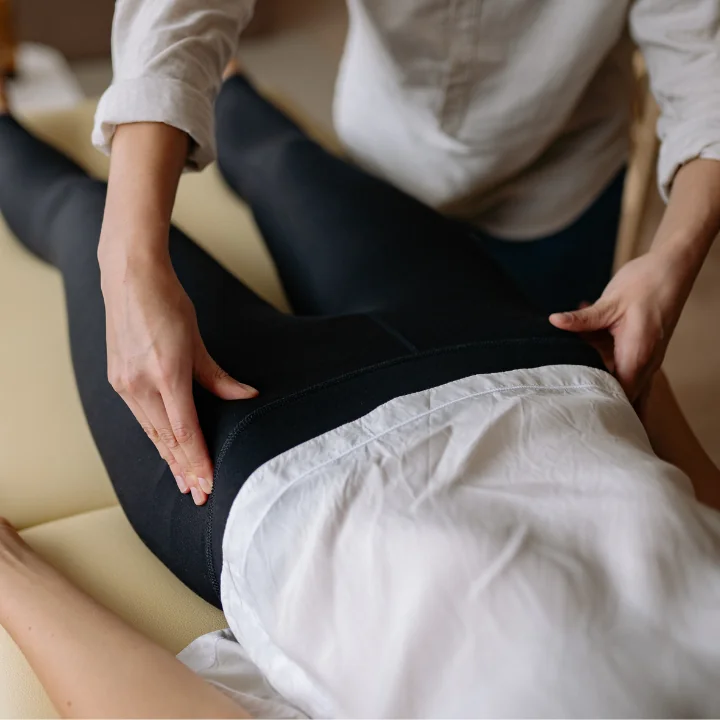
Your first visit is an evaluation. Dr. White assesses how your hip moves, identifies which structures are involved, and reviews any imaging you have. Many hip pain patients also have alignment issues in the lower back or knee that contribute to the load on the joint. We address those too.
Treatment sessions take about 10 to 15 minutes. Most patients need six to twelve sessions, usually two or three times a week at the start.
Results build from session to session. Patients usually describe the hip feeling lighter and less restricted, standing up from a chair getting easier, less pain on walks, and less stiffness first thing in the morning.
When hip replacement is on the table
If a surgeon has told you that you need hip replacement, that's worth taking seriously. But it's also worth knowing that MLS Laser combined with the right strengthening and alignment work has helped many patients delay replacement by years.
If your hip pain is severe and your activities are heavily limited, replacement may eventually be the right call. The question is whether you've exhausted your non-surgical options first.
Frequently Asked Questions
How quickly does MLS Laser work for hip pain?
Most patients notice some relief within the first three to five sessions. Bigger, lasting changes usually show up by session six to eight. We tell every patient up front: if you're not feeling real progress by then, we change the plan.
Does insurance cover this?
MLS Laser Therapy is generally not covered by insurance. We'll discuss the cost and payment options openly at your first visit. Most patients find the price reasonable compared to the long-term cost of medications, injections, and missed work.
What if my pain is more on the side of my hip than the front?
Side-of-hip pain usually points to bursitis or gluteal tendonitis. Both respond well to MLS Laser. We'll figure out the source at your first visit and target the right structures.
Will the treatment hurt?
No. The treatment is painless. You'll feel a gentle warmth on the treated area. Some people fall asleep during sessions.
What if I already had a hip replacement?
MLS Laser is safe over a hip replacement and useful for post-surgical recovery, scar tissue, and surrounding muscle tension. Many of our patients use it during their rehab.